

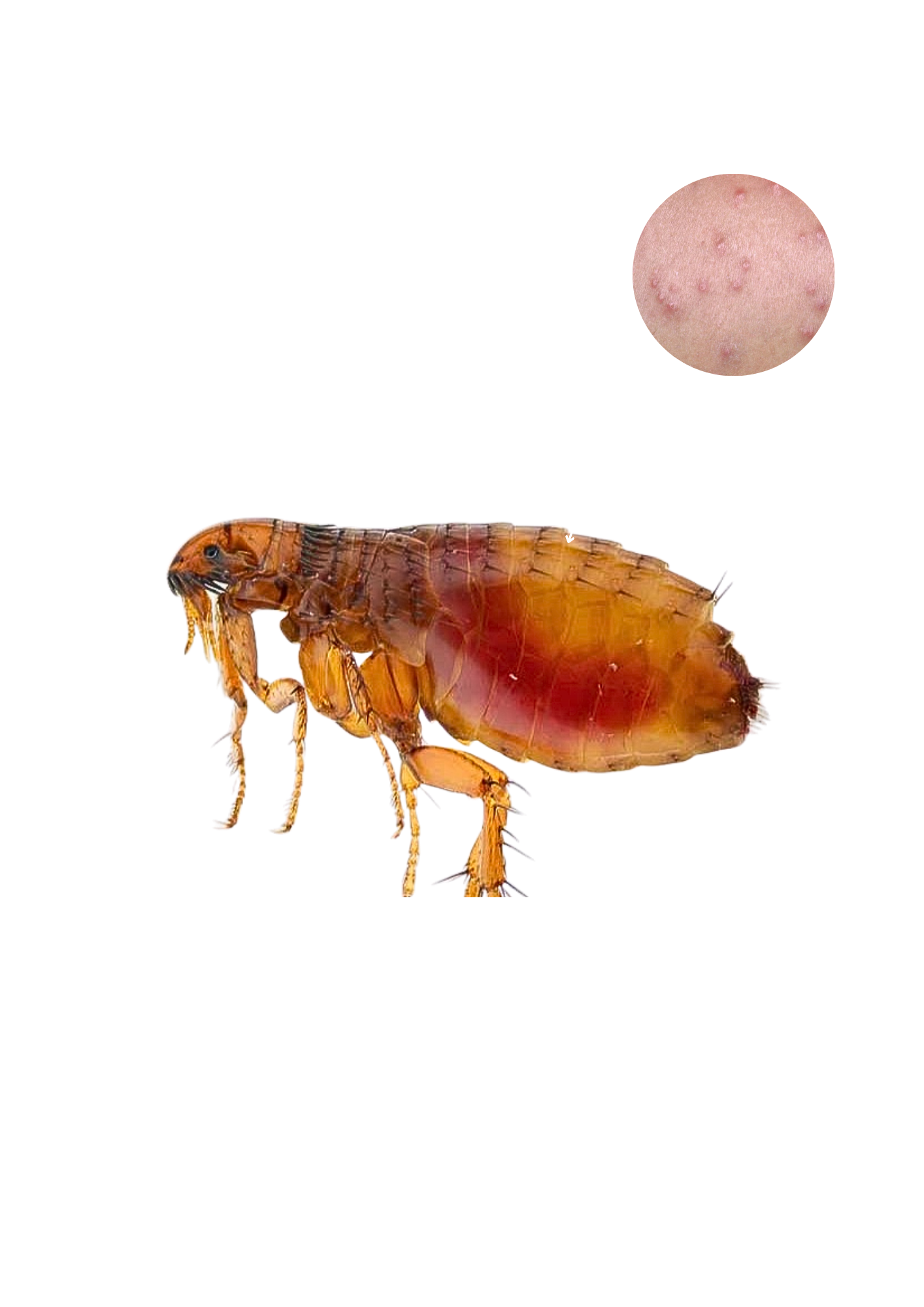
Fleas
Oh no, I think I have a Flea problem
Fleas are one of the most misunderstood pests we deal with. They’re tiny, fast, and often go unnoticed until the infestation is already well underway.
If you’ve ever felt like fleas “appeared out of nowhere”, you’re not wrong. But there’s always a reason, and more importantly, there’s a system to getting rid of them properly.
The bad news is: In warm climates like Queensland, this cycle can continue year-round, meaning infestations don’t naturally die off. Yep, not what you wanted to hear we know….but don’t worry, we can help you out!
First off, let’s identify if it’s really fleas you’re dealing with
Fleas are small (around 1–3mm), dark brown insects that move quickly and jump rather than fly.
Here’s what to look for:
On pets:
Excessive scratching or biting
Hair loss or irritated skin
Tiny black specks in fur (this is “flea dirt” — digested blood)
On humans:
Small, itchy bites (often around ankles and lower legs)
Bites appearing in clusters or lines
In the home:
Fleas jumping on socks or legs
Activity in carpeted areas or pet bedding
Outside the home:
Fleas hate sunlight and dry heat. They thrive in:
Under decks and patios
Along fence lines
Under bushes and dense garden beds
Areas that stay moist and protected
If you’re seeing even a few fleas, there are almost always hundreds more developing out of sight.
The lifecycle
Fleas go through four stages:
Eggs
Laid on pets but fall into carpets, cracks, and furniture
Hatch in 1–10 days
Larvae
Live deep in carpets, moist shaded outdoor areas and avoid light
Feed on organic debris and flea droppings
Develop over 5–20 days
Pupae
Form a protective cocoon
Resistant to most treatments
Can remain dormant for weeks to months
Adults
Emerge when triggered by heat, vibration, or carbon dioxide
Begin feeding immediately and start laying eggs…Yes, they lay eggs immediately,
Only about 5% of fleas are adults, the rest are hidden in and around your home, which means you may think they’re dealt with…until they’re not.
How to Avoid Fleas
Prevention is always easier (and cheaper) than treatment.
For pets:
Maintain consistent flea prevention (vet-approved treatments)
Regular grooming and washing of bedding
For your home:
Vacuum frequently (especially carpets and edges)
Wash pet bedding in hot water
Keep lawns trimmed and reduce shaded, damp areas outside
For your yard:
Limit wildlife access (possums, rodents, stray animals)
Keep organic debris to a minimum
What’s So Bad About Fleas?
It’s not just the itching.
Fleas can cause:
Allergic reactions in both pets and humans
Skin infections from scratching
Tapeworm transmission in pets
Severe infestations that impact sleep, comfort, and hygiene
For pets, especially, fleas can become a serious health issue if left untreated.
What to Do If You Have Fleas
Act quickly, delays allow the lifecycle to continue.
Step 1: Treat the pet
Use a fast-acting flea treatment (vet-recommended)
Step 2: Treat the environment
Vacuum thoroughly (daily if possible)
Wash bedding, rugs, and fabrics
Call in a pest professional…(That’s us!)
Step 3: Expect activity after treatment
Fleas may appear more active initially
This is due to emerging adults from the pupae stage
This is normal, not a failed treatment.
Step 4: Ensure your Pest professional plans to return
Fleas often require more than one treatment to ensure the lifecycle is successfully treated, ensure your pest guy plans to treat this accordingly.
How We Treat Fleas (The Right Way)
At a professional level, flea control is about breaking the lifecycle, not just killing what you can see. Which is why we would suggest our premium two-part treatment to ensure the lifecycle of the flea is broken.
Our approach typically includes:
1. We will initially treat with a residual treatment:
This is applied to carpets, skirting boards, shaded external areas of the home and other key activity areas
This will target newly emerging fleas and current adults before they can breed further
It will also remain active in the home to continue to treat any future fleas that hatch after the treatment
Once dry, this treatment is non-transferrable to humans and therefore is a safe approach for your family and pets
2. We then use an Insect Growth Regulators (IGRs)
This will disrupt development from egg to adult, preventing the next generation
3. Targeting Harbourage Areas
Pet resting areas
Under furniture
Cracks and edges where larvae develop
Shaded and moist areas in and around the home
Under home areas
4. Lifecycle-Based Timing
We will then return two weeks after the first treatment to ensure a second treatment completely breaks the lifecycle
On occasion, you may need more than two treatments
These treatments are timed to coincide with emerging fleas from pupae
The goal isn’t just control, it’s complete lifecycle interruption.