

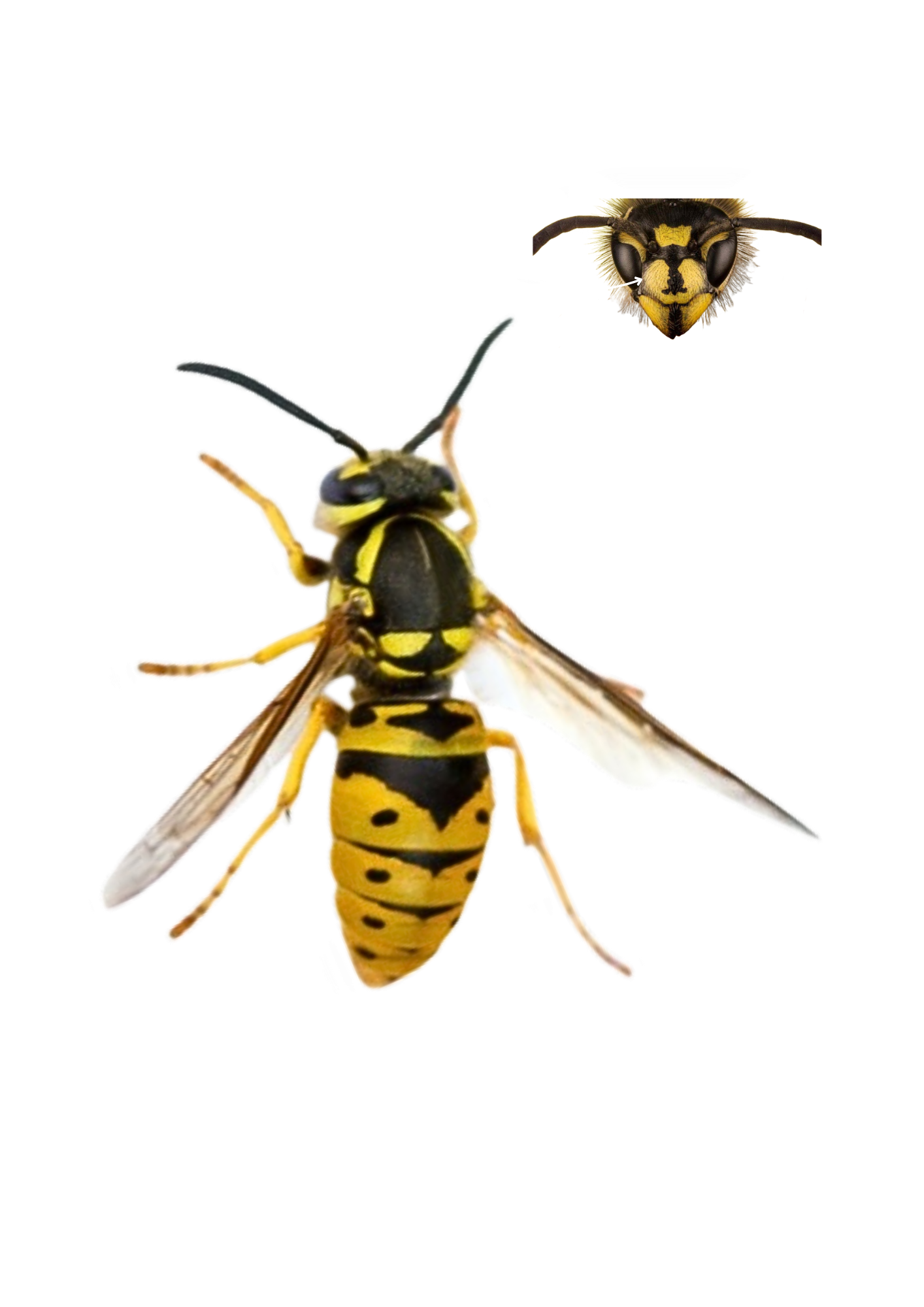
European Wasps
Oh no, I think I have European Wasps.
The European wasp is the uninvited guest of summer picnics. Small, persistent, and unmistakably bold, it has a knack for appearing the moment a soft drink is opened, disappearing just as quickly when swatted away… only to return and often with reinforcements. If you’ve ever found yourself performing a careful “stay calm” routine while guarding your food, you’ll already be familiar with their determined nature.
In this article we will:
Help you identify if you’ve got European wasps settling in.
Give you some information to help determine if you want to keep or treat these pests.
Give you tips to avoid getting stung and what to do if you do get stung.
Tell you exactly how we treat these little guys (and their queen).
Before writing them off entirely, though, it’s worth taking a closer look at these striped little pests: what drives their behaviour, why they’re so drawn to our food, and how to navigate the warmer months with minimal disruption.
European wasps are those bright yellow-and-black insects and unlike native wasps or bees, they’re highly social, highly organised, and highly interested in whatever you’re eating.
They may have originated from Europe but they’ve made themselves quite at home in places Australia. And by “made themselves at home,” we mean they have taken over the backyard and claimed squatter’s rights in your fruit bowl, and sorry break it to you but Brisbane and Gold Coast are favourite destinations for these little guys.
They live in colonies that can number in the thousands (generally between 1000 - 5000), usually tucked underground or in wall cavities. So if you see one… there are definitely more nearby. Many more.
Why are European wasps such a concern?
Though many wasps are able to be ignored and generally will leave you alone, if you leave them alone, European wasps do not behave the same way.
They are highly aggressive
They love food, and are not afraid to get into your space to get to your food, and no, you don’t want to swat these guys
They can sting multiple times, and it is painful
They live in colony’s that number in the thousands
The nests are not easy to see or find, often hidden underground or in wall cavities. if you see one, then there are plenty more nearby
They are persistent, they remember where they were, where the food was, and they come back, and quickly
When they return, it’s rarely alone…hey release pherimones to call for back up
They are actually classed as predators, not just pests
What kind of home suburbia are European wasps most active and attracted to?
Leafy established suburbs
Retaining walls
Family homes because of the regular food and BBQ’s
New estates with disturbed soil
Property’s with water sources (bird bath/pool ect)
Where in my home/yard do this pests take residence?
Underground nests
Wall cavities - such as brickwork & weepholes
Let’s figure it out, do you have European wasps?
If you get close enough, here are some physical identifying features:
Spade shaped black marking on the face
Brighter and bolder colours
Shorter legs than your standard paper wasp
They fly with their legs raised
Their antennae is black instead f the more common yellow
Some other identifying behaviours are:
You can’t find the nest, but they keep popping up
They persistently return to your food
You see them enter or exit an underground burrow
Though European wasps do have some benefits such as feeding on caterpillars and flies, pollination roles and just. being generally part of the ecosystem, it’s worth noting that their aggression and love of human food often outweighs the pros if you find them settling into your backyard and around your kids.
Here are some signs you might have a nest nearby:
A steady stream of wasps entering and exiting the same spot
Activity around wall cavities, roof spaces, or garden holes
Increased wasp traffic even when no food is around
Treating the problem
Though it might be tempting to handle it yourself, wasp nests can contain thousands of very defensive residents. Disturbing one is like poking a very angry, very coordinated army. And the DIY pesticides that can be accessed without a license are not strong enough to treat a colony or queen.
Instead:
Keep your distance from the nest area
Warn others in the household (and maybe the neighbours too)
What to Do If You Get Stung
Stay calm
Clean the area with soap and water
Apply a cold pack to reduce swelling
Take pain relief if needed
Watch out for signs of an allergic reaction, like:
Difficulty breathing
Swelling of the face or throat
Dizziness or fainting
If any of those happen, seek medical help immediately.
How does Pesthouse respond to and treat European wasps?
We locate the nest by watching for flight paths
We will schedule your treatment to be at dusk or early morning as activity is lowest during those times of the day
We use a dust insecticide that will be carried back to the queen. Kill the queen, kill the colony
We will follow up if required to ensure they have been effectively treated